
Low Stakes Casino Games: Play More, Risk Less
Bankroll erosion is a math problem, not a luck problem, and every player who grinds high-variance slots for six hours straight eventually learns that lesson the hard way. Low stakes casino games flip the equation by shrinking your exposure per round while keeping the entertainment loop intact. The mechanics are brutally simple: smaller bets, longer sessions, slower bleed. But the real edge lives in the volatility profile and the house edge spread, not in the minimum bet number printed on the table felt. 🎲
Most players misunderstand what "low stakes" actually means at the hardware level. It does not mean low quality, and it certainly does not mean low entertainment value. It means the wager denomination is calibrated so a session can absorb hundreds of outcomes without triggering ruin. That single design decision changes everything about how a game feels, how long you stay engaged, and how much the casino's mathematical advantage actually costs you per hour of play.
The Volatility Math Nobody Bothers to Read
Here is the technical reality that separates sharp players from broke ones: a 5% house edge on a $1 bet costs you five cents per round in expected value, while the same edge on a $50 bet costs you $2.50. Over 500 rounds, that gap compounds into a $1,225 difference. Low stakes play is not about cowardice — it is about buying more spins, more hands, more decisions for the same total risk capital. You are essentially renting time on the reels at a discount rate.
Low stakes casino games exploit this principle aggressively because the variance-to-bankroll ratio stays manageable even during cold streaks. A player with a $200 bankroll betting $0.20 per spin can survive a 300-spin drought without panic. The same player betting $2 per spin is wiped out in 100 spins. Same game, same RTP, completely different survival curve. 💰
Which Games Actually Deliver Under Low Stakes Conditions
Not every game scales down gracefully. Slots with fixed paylines are the cleanest fit because the bet size adjusts proportionally across the entire paytable. Video poker variants like Jacks or Better become genuinely competitive at low denominations because the 99.5%+ return-to-player figure holds regardless of coin size. Blackjack at a $1 minimum table preserves the basic strategy edge almost perfectly, provided the rules are not butchered with 6:5 payouts on naturals. 🃏
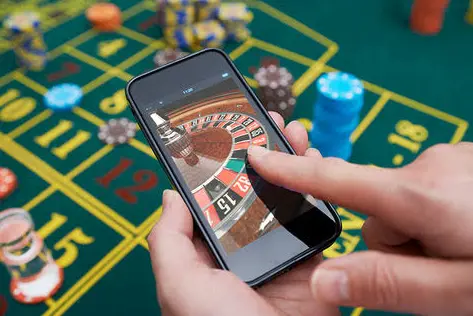
Roulette is where the trap hides. European single-zero wheels at low stakes still carry a 2.7% house edge, but some venues quietly swap in American double-zero layouts for their cheap tables. That jump from 2.7% to 5.26% is a silent tax on every spin. Always verify the wheel configuration before you sit down — the minimum bet tells you nothing about the actual mathematical cost.
The Session-Length Advantage Most Players Ignore
The real payoff of low stakes casino games is not the money saved per hand — it is the decision volume. More rounds means more exposure to variance smoothing, which means your actual results cluster tighter around the expected return. A player who logs 2,000 low-stakes rounds experiences a far more predictable outcome distribution than one who fires 50 max bets and hopes for a heater. This is not a theory; it is basic statistical convergence.
Operators know this, and the sharper ones build their floor layout around it. Penny slots, micro-limit poker tables, and $0.50 blackjack seats are not charity — they are customer retention infrastructure. The house still wins its percentage, but it wins it slowly, and players who feel like they are getting a long ride keep coming back. That is the entire business model in one sentence.

Bankroll Mechanics That Separate Discipline From Delusion
Set a hard session cap based on total rounds, not clock time. If your bankroll is $150 and your average bet is $0.30, that is roughly 500 rounds of pure survival capital before variance even enters the conversation. Factor in the house edge and your realistic session window shrinks to about 400 meaningful rounds. Anything beyond that point is pure exposure with no strategic upside. Track it, respect it, walk away when the counter hits zero.
Low stakes play rewards patience and punishes ego. The players who treat micro-bets as a stepping stone to bigger action are the ones who blow up their accounts chasing a thrill that the math never promised. The players who treat low stakes as the destination itself — a sustainable, grindable, entertainment-first model — are the ones still playing a year later with their bankrolls intact. The odds do not care about your ambitions; they only care about your bet size relative to your capital.